Introduction
Autoimmune hepatitis (AIH) is a chronic inflammatory liver disease in which the immune system mistakenly attacks healthy liver cells. Without appropriate treatment, ongoing inflammation can cause liver scarring, cirrhosis, and potentially liver failure. Fortunately, immunosuppressive medications can control the disease in many patients and help prevent serious complications.

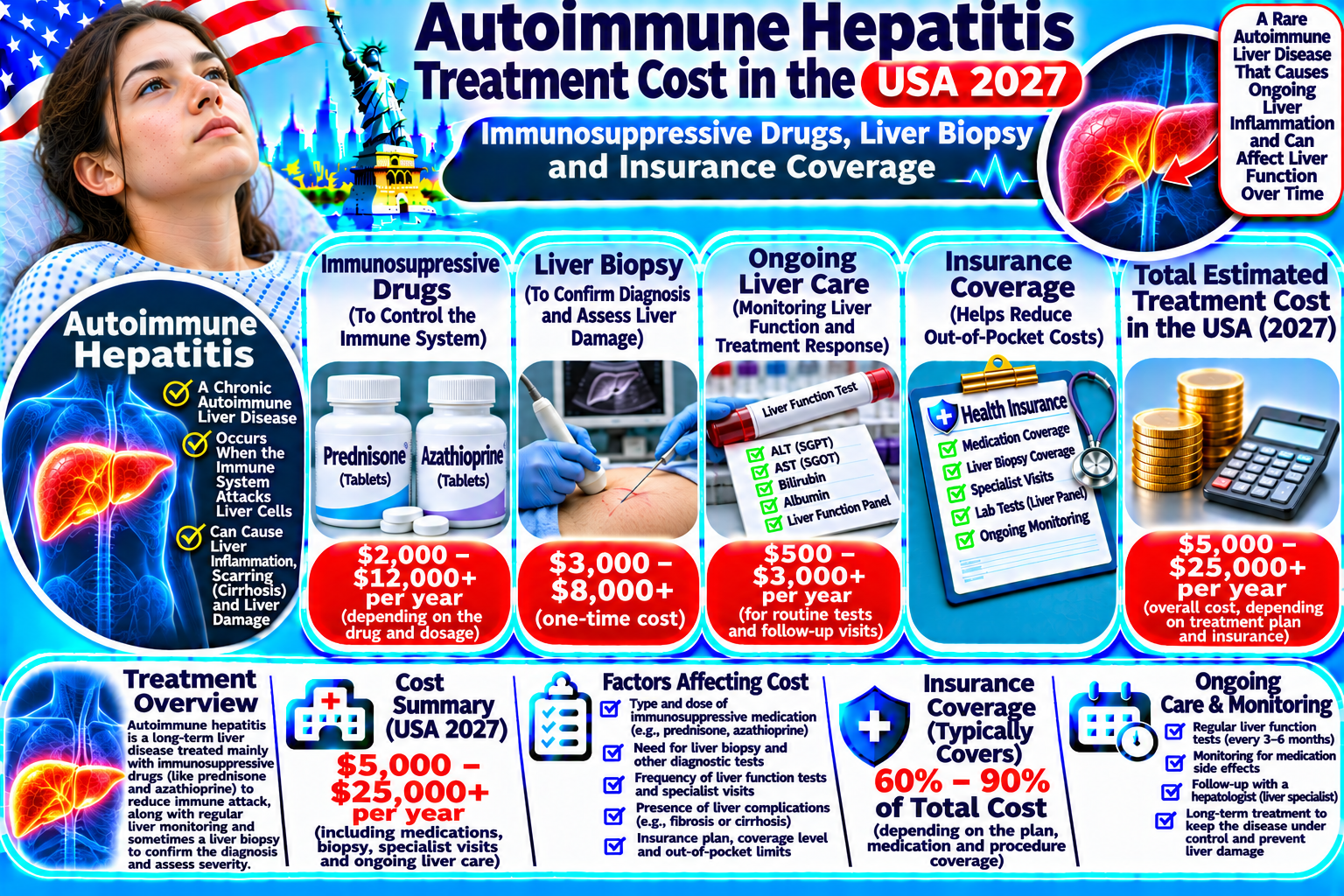
Understanding autoimmune hepatitis treatment costs in the USA in 2027 is important for patients comparing prescription medications, liver biopsy expenses, hepatologist consultations, laboratory monitoring, and health insurance coverage.
Some patients respond well to affordable generic medications. Others require alternative immunosuppressive therapies, frequent testing, hospitalization, or advanced liver care.
This guide examines estimated American autoimmune hepatitis treatment expenses for 2027, including diagnostic procedures, medications, specialist fees, insurance benefits, and strategies for managing long-term healthcare costs.
What Is Autoimmune Hepatitis?
Autoimmune hepatitis develops when immune cells attack liver tissue, producing inflammation that can damage hepatocytes and interfere with normal liver function.
The condition can affect children and adults. It is diagnosed more frequently in women, although people of any sex can develop the disease.
AIH may progress gradually or present with sudden, severe liver inflammation. Some patients have few symptoms initially, while others experience substantial fatigue and abnormal liver blood tests.
Early diagnosis and appropriate immunosuppressive treatment improve the chances of controlling inflammation and preventing permanent liver damage.
Common Symptoms of Autoimmune Hepatitis
- Persistent fatigue and weakness.
- Joint pain or discomfort.
- Upper abdominal discomfort.
- Loss of appetite.
- Nausea.
- Yellowing of the skin or eyes.
- Dark urine.
- Unexplained itching.
- Enlarged liver.
- Fluid retention in advanced disease.
Symptoms vary widely. Some individuals are diagnosed after routine blood testing identifies elevated liver enzymes.
How Is Autoimmune Hepatitis Diagnosed?
Liver Function Blood Tests
Blood tests measure alanine aminotransferase, aspartate aminotransferase, bilirubin, albumin, and other markers of liver injury or function.
Autoimmune Antibody Testing
Antinuclear antibodies, smooth muscle antibodies, and other autoantibodies may support the diagnosis.
Immunoglobulin G Testing
Elevated immunoglobulin G levels are common in autoimmune hepatitis and may help assess disease activity.
Viral Hepatitis Testing
Doctors investigate viral hepatitis and other causes of liver inflammation before confirming autoimmune hepatitis.
Liver Ultrasound
Ultrasound helps assess liver structure and identify abnormalities requiring further evaluation.
Liver Biopsy
A liver biopsy is frequently important for confirming autoimmune hepatitis, assessing inflammation, and determining the extent of fibrosis.
Autoimmune Hepatitis Treatment Options
Prednisone or Prednisolone
Corticosteroids reduce immune-mediated liver inflammation and are commonly used to induce disease remission.
Because prolonged steroid treatment can cause complications, clinicians generally aim to reduce the dose once disease control is achieved.
Azathioprine
Azathioprine is a commonly used maintenance immunosuppressive medication. It may be combined with corticosteroids to control inflammation while reducing long-term steroid exposure.
Mycophenolate Mofetil
Mycophenolate mofetil may be used in selected patients, particularly when azathioprine is not tolerated or is unsuitable.
Budesonide
Budesonide may be considered for selected patients without cirrhosis, depending on current clinical guidance and individual circumstances. It is not appropriate for patients with cirrhosis.
Other Immunosuppressive Therapies
Patients with difficult-to-control disease may require specialist-directed alternatives, including tacrolimus or other medications.
Liver Transplantation
Liver transplantation may be necessary for selected patients with advanced liver failure or severe complications despite appropriate treatment.
Autoimmune Hepatitis Treatment Cost in the USA in 2027
Treatment expenses depend on disease severity, medication selection, diagnostic procedures, laboratory monitoring, hospital utilization, and insurance benefits.
Many generic immunosuppressive drugs are relatively affordable, but repeated specialist visits and testing can increase annual expenses.
The following amounts are illustrative 2027 budgeting estimates, not verified future prices, national averages, or guaranteed patient payments.
Estimated USA Treatment Cost Breakdown
| Treatment or Service | Estimated Cost (USD) |
|---|---|
| Initial Hepatologist Consultation | $250–$900 per visit |
| Follow-Up Specialist Visit | $150–$500 per visit |
| Liver Function Blood Tests | $50–$400 per testing episode |
| Autoimmune Antibody and IgG Tests | $150–$900+ |
| Liver Ultrasound | $200–$1,200+ |
| Liver Biopsy | $2,000–$10,000+ |
| Prednisone or Prednisolone | $5–$100+ monthly |
| Azathioprine | $15–$200+ monthly |
| Mycophenolate Mofetil | $30–$500+ monthly |
| Budesonide | $100–$1,500+ monthly |
| Hospitalization for Severe Hepatitis | $10,000–$80,000+ per admission |
| Liver Transplant Treatment Episode | $700,000–$1.8 million+ |
Important: These hypothetical gross-cost ranges are for financial planning only. Actual prices vary by facility, pharmacy, treatment duration, insurance-negotiated rates, and medical necessity. A liver transplant is not required for most patients.
USA Annual Treatment Cost Comparison
Because this article focuses on the United States, the following table compares different American treatment scenarios rather than international countries.
| USA Treatment Scenario | Illustrative Annual Budget |
|---|---|
| Stable Disease With Generic Medication | $1,000–$5,000+ |
| New Diagnosis With Liver Biopsy | $4,000–$15,000+ |
| Complex Disease With Frequent Monitoring | $5,000–$25,000+ |
| Severe Flare Requiring Hospital Care | $15,000–$100,000+ |
| Liver Transplant Treatment Year | $750,000–$2 million+ |
These scenarios are illustrative examples, not standardized treatment packages. Costs may overlap, and most patients do not require every procedure listed.
Immunosuppressive Drug Costs for Autoimmune Hepatitis
Immunosuppressive medications are the foundation of autoimmune hepatitis treatment. They reduce abnormal immune activity, control liver inflammation, and help prevent further tissue damage.
Many patients begin treatment with corticosteroids and a steroid-sparing medication. The treatment plan may change as liver enzyme levels improve.
Although generic medications are often affordable, long-term treatment also involves laboratory monitoring, specialist visits, and management of potential side effects.
Prednisone Treatment Expenses
Prednisone is a commonly prescribed corticosteroid used to control active autoimmune hepatitis. It may be started at a higher dose and gradually reduced as the patient responds.
Generic prednisone usually has a relatively low pharmacy price. However, prolonged treatment may increase expenses associated with monitoring blood glucose, blood pressure, bone health, and infection risk.
Potential adverse effects include weight gain, osteoporosis, diabetes, mood changes, and increased susceptibility to infections.
Doctors aim to use the lowest effective steroid dose while maintaining disease control.
Azathioprine Medication Costs
Azathioprine is frequently prescribed alongside corticosteroids or as maintenance therapy after remission.
It helps reduce immune system activity and may allow patients to decrease their corticosteroid dosage.
Before treatment, clinicians may assess thiopurine methyltransferase activity or relevant genetic variants to identify patients at increased risk of medication toxicity.
Regular complete blood counts and liver tests are important because azathioprine can cause bone marrow suppression, liver injury, or other adverse effects.
Generic azathioprine is generally less expensive than many specialty medications.
Mycophenolate Mofetil Expenses
Mycophenolate mofetil may be used when azathioprine is unsuitable, poorly tolerated, or ineffective.
Some specialists also consider it as an initial treatment option in selected patients.
Medication costs depend on formulation, dosage, pharmacy, and insurance benefits. Laboratory monitoring is required to evaluate blood counts, liver function, and treatment safety.
Mycophenolate can cause serious harm during pregnancy. Patients who may become pregnant require appropriate counseling about contraception and pregnancy planning.
Liver Biopsy Costs in the USA
A liver biopsy is an important diagnostic procedure for many patients with suspected autoimmune hepatitis.
During the procedure, a small tissue sample is collected and examined under a microscope to assess inflammation, fibrosis, and other liver abnormalities.
The total cost may include:
- Pre-procedure blood testing.
- Ultrasound or other imaging guidance.
- Physician procedure fees.
- Hospital or outpatient facility charges.
- Pathology laboratory analysis.
- Recovery and observation services.
Not every patient requires repeated biopsies. Follow-up biopsy decisions depend on diagnostic uncertainty, treatment response, and specialist recommendations.
Liver Function Test and Monitoring Expenses
Regular laboratory testing helps determine whether autoimmune hepatitis treatment is controlling liver inflammation.
Important measurements include alanine aminotransferase, aspartate aminotransferase, bilirubin, immunoglobulin G, and complete blood counts.
Testing is often more frequent during treatment initiation or medication adjustments. Patients with stable disease may require less frequent monitoring.
Additional tests may be needed to assess medication toxicity, bone health, or complications of chronic liver disease.
Hospital Expenses for Severe Autoimmune Hepatitis
Some patients develop severe liver inflammation requiring hospitalization, particularly when the disease causes jaundice, impaired blood clotting, or acute liver failure.
Hospital treatment may include intravenous medications, specialist assessment, repeated laboratory testing, imaging, and intensive monitoring.
Patients with acute liver failure require urgent evaluation at a specialized liver center.
Hospital expenses depend on the severity of illness, length of stay, and need for intensive care or additional procedures.
Health Insurance Coverage for Autoimmune Hepatitis
Many comprehensive American health insurance plans cover medically necessary autoimmune hepatitis treatment, including specialist consultations, diagnostic testing, liver biopsy, and eligible prescription medications.
However, patient expenses vary according to insurance plan rules and provider networks.
Important coverage considerations include:
- Annual deductible.
- Copayments and coinsurance.
- Prescription medication formulary.
- Specialist referral requirements.
- Liver biopsy authorization.
- Participating laboratory facilities.
- Hospital network restrictions.
- Annual out-of-pocket maximum.
Patients should verify whether prescribed medications and diagnostic procedures are covered before treatment whenever practical.
Medicare and Medicaid Coverage
Medicare may cover qualifying autoimmune hepatitis services for eligible beneficiaries under applicable medical necessity and benefit rules.
Medicare Part B may cover certain outpatient consultations and diagnostic procedures, while Part D may cover eligible prescription medications.
Medicaid may provide coverage for eligible patients, although prescription formularies, specialist access, and authorization requirements vary by state.
Factors Influencing Autoimmune Hepatitis Treatment Prices
1. Disease Severity
Patients with stable disease may require fewer medical services than those experiencing severe inflammation or advanced liver complications.
2. Medication Selection
Generic prednisone and azathioprine are generally less expensive than some alternative immunosuppressive treatments.
3. Diagnostic Procedures
Liver biopsy, imaging, and specialized laboratory testing can increase initial diagnostic expenses.
4. Hospital Location
Hospital charges and specialist fees differ across American states and healthcare systems.
5. Insurance Benefits
Deductibles, negotiated rates, network participation, and prescription coverage influence patient out-of-pocket expenses.
6. Treatment Duration
Autoimmune hepatitis often requires long-term therapy, so medication and monitoring expenses can accumulate over many years.
How to Reduce Autoimmune Hepatitis Treatment Costs
- Verify insurance coverage before expensive procedures.
- Ask about appropriate generic medications.
- Use participating hepatologists and laboratories.
- Compare covered outpatient biopsy facilities.
- Request written treatment cost estimates.
- Review prescription assistance programs.
- Explore Medicare or Medicaid eligibility.
- Consult hospital financial counselors.
Patients should never stop immunosuppressive medications or change their dosage without medical supervision because autoimmune hepatitis can relapse and cause serious liver damage.
Frequently Asked Questions
How much does autoimmune hepatitis treatment cost in the USA in 2027?
Illustrative annual expenses may range from approximately $1,000 to $5,000 or more for stable disease treated with generic medications. Complicated cases requiring biopsy, hospitalization, or advanced liver care can cost substantially more.
Is prednisone expensive?
Generic prednisone is usually relatively affordable, although monitoring and treatment of potential side effects can add to overall healthcare expenses.
How much does a liver biopsy cost?
A liver biopsy may generate several thousand dollars in gross medical charges, depending on the facility, imaging guidance, pathology fees, and insurance arrangements.
Does insurance cover immunosuppressive medications?
Many comprehensive plans cover commonly prescribed immunosuppressive drugs, subject to formulary rules, deductibles, and cost-sharing requirements.
Can autoimmune hepatitis be cured?
There is no established medication that permanently cures autoimmune hepatitis in every patient. Treatment can achieve remission and prevent or reduce liver damage. Some carefully selected patients may eventually discontinue medication under specialist supervision.
Is lifelong monitoring necessary?
Ongoing monitoring is generally important because autoimmune hepatitis can relapse even after prolonged remission.
Conclusion
Autoimmune hepatitis treatment costs in the USA in 2027 depend on immunosuppressive drugs, liver biopsy expenses, hepatologist consultations, laboratory testing, hospitalization, and health insurance coverage.
Many patients manage the disease with affordable generic medications and regular monitoring. Others require additional treatment because of medication intolerance, severe inflammation, or advanced liver complications.
Patients should compare complete treatment estimates, verify insurance benefits, and work closely with experienced liver specialists.
Early diagnosis, appropriate immunosuppressive therapy, consistent monitoring, and careful financial planning can help manage the long-term healthcare expenses associated with autoimmune hepatitis.
Medical Disclaimer: This article provides general educational and financial planning information only. It does not replace professional medical advice, diagnosis, or treatment. All 2027 cost ranges are illustrative estimates and should be verified directly with healthcare providers, pharmacies, hospitals, and insurance companies.
