Introduction
Polycystic kidney disease (PKD) is an inherited condition in which multiple fluid-filled cysts develop within the kidneys. Over time, these cysts can enlarge the kidneys, contribute to high blood pressure, cause pain, and gradually reduce kidney function. Some patients eventually develop advanced chronic kidney disease or kidney failure.

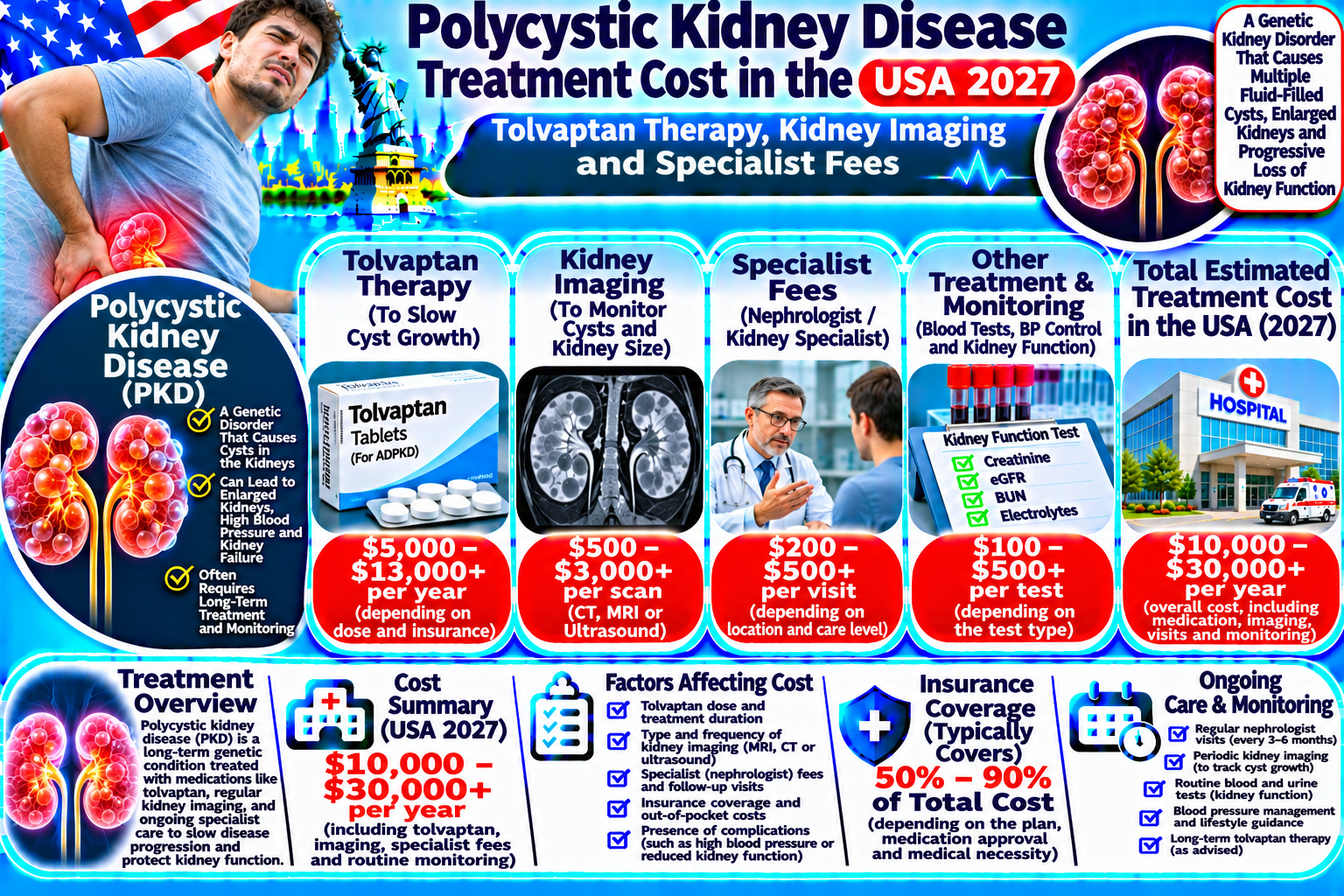
Understanding polycystic kidney disease treatment costs in the USA in 2027 is important for patients and families comparing tolvaptan therapy, kidney imaging, nephrologist consultations, laboratory monitoring, and health insurance expenses.
Many individuals with PKD receive long-term monitoring and blood pressure treatment. Selected adults with autosomal dominant polycystic kidney disease (ADPKD) may benefit from tolvaptan, a specialty medication designed to slow kidney function decline.
Patients with advanced disease may also require dialysis, kidney transplantation, or hospitalization for complications. This guide examines estimated American PKD treatment expenses for 2027 and explains how medications, diagnostic tests, specialist fees, disease severity, and insurance coverage affect overall costs.
What Is Polycystic Kidney Disease?
Polycystic kidney disease is a genetic disorder characterized by the development of numerous cysts in the kidneys. These cysts contain fluid and may increase in size and number over time.
The two principal inherited forms are autosomal dominant polycystic kidney disease and autosomal recessive polycystic kidney disease.
ADPKD is the more common form and often becomes clinically apparent during adulthood. Autosomal recessive PKD is less common and may cause serious kidney and liver problems during infancy or childhood.
Treatment approaches differ between these conditions. Tolvaptan is used for selected adults with ADPKD, not as a general treatment for every type of PKD.
Common Symptoms of Polycystic Kidney Disease
- High blood pressure.
- Pain in the back, abdomen, or sides.
- Blood in the urine.
- Frequent urinary tract infections.
- Kidney stones.
- Abdominal fullness due to enlarged kidneys.
- Headaches.
- Fatigue associated with declining kidney function.
- Swelling in advanced kidney disease.
- Changes in urination as kidney function worsens.
Some patients have no noticeable symptoms for years. Family history, routine imaging, or blood pressure evaluation may lead to diagnosis.
How Is Polycystic Kidney Disease Diagnosed?
Kidney Ultrasound
Ultrasound is frequently used to detect kidney cysts and assess kidney size. It is noninvasive and generally less expensive than MRI or CT imaging.
Magnetic Resonance Imaging
Kidney MRI can provide detailed measurements of kidney volume. Height-adjusted total kidney volume may help estimate disease progression risk in selected patients with ADPKD.
Computed Tomography
CT scans may be used to investigate kidney stones, bleeding, infection, or other complications. The choice of imaging depends on the clinical question.
Kidney Function Blood Tests
Blood creatinine and estimated glomerular filtration rate (eGFR) help determine how effectively the kidneys filter waste products.
Urine Testing
Urinalysis and urine protein measurements may identify bleeding, infection, or other kidney abnormalities.
Genetic Testing
Genetic testing may be considered when the diagnosis is uncertain, family history is unclear, or genetic information could influence clinical or family planning decisions.
Polycystic Kidney Disease Treatment Options
Blood Pressure Management
Controlling high blood pressure is essential for protecting kidney function. Angiotensin-converting enzyme inhibitors or angiotensin receptor blockers are commonly considered when appropriate.
Tolvaptan Therapy
Tolvaptan, marketed for ADPKD in the United States as Jynarque, may slow kidney function decline in adults at risk of rapidly progressing disease.
It blocks vasopressin V2 receptors, reducing processes that contribute to cyst growth. It is not a cure and is not appropriate for every patient.
Pain and Infection Management
Patients may require treatment for kidney pain, cyst infections, urinary tract infections, or kidney stones.
Kidney-Protective Lifestyle Measures
Individualized dietary advice, sodium reduction, appropriate hydration, and avoidance of kidney-damaging medications can support overall kidney health.
Dialysis
Dialysis may become necessary if kidney function declines to the point where the kidneys can no longer adequately maintain the body’s fluid and metabolic balance.
Kidney Transplantation
Kidney transplantation is an important treatment option for eligible patients with kidney failure caused by PKD.
Polycystic Kidney Disease Treatment Cost in the USA in 2027
PKD treatment expenses vary according to kidney function, medication selection, imaging frequency, nephrologist appointments, complications, and insurance benefits.
Routine monitoring and generic blood pressure medications are generally less expensive than specialty tolvaptan therapy or treatment for kidney failure.
The following amounts are illustrative 2027 budgeting estimates, not verified future prices, national averages, or guaranteed patient payments.
Estimated USA Treatment Cost Breakdown
| Treatment or Service | Estimated Cost (USD) |
|---|---|
| Initial Nephrologist Consultation | $250–$900 per visit |
| Follow-Up Nephrology Appointment | $150–$500 per visit |
| Kidney Function Blood Tests | $50–$350 per episode |
| Urine Testing | $20–$200 per episode |
| Kidney Ultrasound | $200–$1,200 per study |
| Kidney MRI | $800–$4,000+ per study |
| Genetic Testing | $300–$3,000+ per evaluation |
| Generic Blood Pressure Medication | $5–$100+ monthly |
| Jynarque (Tolvaptan) | $10,000–$20,000+ monthly |
| Liver Safety Monitoring | $50–$400 per testing episode |
| Hospitalization for PKD Complications | $8,000–$60,000+ per admission |
| Hemodialysis | $60,000–$120,000+ annually |
| Kidney Transplant Treatment Episode | $300,000–$650,000+ |
Important: These figures are hypothetical gross-cost planning ranges. Jynarque pricing is not a verified 2027 quotation. Actual charges, negotiated rates, drug discounts, and patient out-of-pocket payments can differ substantially. Dialysis and transplant estimates are separate advanced-disease scenarios.
USA Annual PKD Treatment Cost Comparison
Because this article focuses on the United States, the following table compares American treatment scenarios rather than international countries.
| USA Treatment Scenario | Illustrative Annual Budget |
|---|---|
| Early PKD With Routine Monitoring | $500–$5,000+ |
| PKD With Frequent Imaging and Testing | $3,000–$12,000+ |
| ADPKD Requiring Tolvaptan | $125,000–$250,000+ |
| Kidney Failure Requiring Dialysis | $60,000–$140,000+ |
| Kidney Transplant Treatment Year | $320,000–$700,000+ |
These scenarios are illustrative rather than standardized treatment packages. Patients do not necessarily require every medication or procedure listed, and some charges may overlap.
Tolvaptan Therapy Costs for Polycystic Kidney Disease
Tolvaptan is an important disease-modifying treatment for selected adults with autosomal dominant polycystic kidney disease. It works by blocking vasopressin activity, helping slow the decline in kidney function among patients at risk of rapid disease progression.
The medication is not recommended for every person with PKD. Nephrologists evaluate kidney function, imaging results, disease progression, and treatment risks before prescribing it.
Tolvaptan is usually taken in divided daily doses. Treatment may continue for years while the patient remains eligible and benefits outweigh potential risks.
Jynarque Medication Expenses in 2027
Jynarque is a branded tolvaptan product used for ADPKD in the United States. Its gross pharmacy cost can reach thousands of dollars monthly.
For illustrative 2027 financial planning, patients may encounter gross medication estimates of approximately $10,000 to $20,000 or more per month. These amounts are not confirmed future prices or guaranteed patient payments.
Generic tolvaptan may also be available through appropriate distribution arrangements. Patients should verify whether a specific product is approved for ADPKD, covered by their plan, and accessible through an authorized pharmacy.
Insurance negotiations, manufacturer assistance, and prescription benefits may substantially reduce the patient’s actual expenses.
Tolvaptan Liver Monitoring Costs
Tolvaptan can cause serious liver injury, making regular liver blood tests essential during treatment.
Required monitoring includes liver enzymes and bilirubin before starting therapy, approximately two and four weeks after initiation, monthly during the first 18 months, and every three months afterward.
Patients receiving tolvaptan must follow the applicable Risk Evaluation and Mitigation Strategy, commonly called REMS, which involves authorized prescribers, pharmacies, and required safety monitoring.
Monitoring expenses depend on laboratory pricing, insurance benefits, and the number of tests performed.
Patients should promptly report symptoms suggesting liver injury, including jaundice, dark urine, unusual fatigue, nausea, or right upper abdominal discomfort.
Side Effects and Additional Treatment Expenses
Tolvaptan increases the amount of water excreted through urine. Common effects include increased urination, thirst, and nighttime bathroom visits.
Patients must be able to maintain appropriate fluid intake and follow individualized hydration instructions.
Dehydration, abnormal sodium levels, or other complications may require additional medical evaluation.
Because of these risks, clinicians assess whether the medication is suitable for the patient’s lifestyle, health conditions, and ability to comply with monitoring requirements.
Kidney Ultrasound Costs
Kidney ultrasound is frequently used to evaluate cysts, kidney structure, and potential complications of PKD.
It is generally more affordable than MRI and does not expose patients to ionizing radiation.
Ultrasound may be performed during initial diagnosis or when new symptoms require investigation.
The number of scans needed depends on clinical circumstances. Patients do not necessarily require ultrasound at every nephrology appointment.
Kidney MRI and Total Kidney Volume Expenses
MRI provides detailed images of kidney anatomy and can help estimate total kidney volume in patients with ADPKD.
Height-adjusted total kidney volume is useful for assessing progression risk and may contribute to decisions about tolvaptan treatment.
MRI charges depend on the imaging facility, geographic location, interpretation fees, and whether additional sequences are required.
Patients should ask whether the quoted price includes radiologist interpretation and kidney volume analysis.
Nephrologist Consultation Fees
Nephrologists coordinate PKD management by monitoring kidney function, controlling blood pressure, evaluating complications, and determining eligibility for specialized treatment.
Patients with stable kidney function may require fewer visits than those experiencing rapid progression or medication-related complications.
Specialist fees may increase when consultations involve detailed imaging reviews, complex medication decisions, or coordination with transplant teams.
Blood Pressure Medication Expenses
High blood pressure is common in ADPKD and can contribute to further kidney damage.
Medications such as lisinopril or losartan may be prescribed when clinically appropriate.
Many blood pressure medications are available as generics, making them relatively affordable compared with specialty drugs.
Regular blood pressure measurements and kidney function tests help clinicians assess treatment effectiveness and safety.
Hospital Costs for PKD Complications
Some patients require hospital treatment for painful cyst complications, infections, kidney stones, bleeding, or advanced kidney dysfunction.
Potential hospital expenses include:
- Emergency department evaluation.
- Blood and urine testing.
- Ultrasound, CT, or MRI imaging.
- Intravenous antibiotics.
- Pain management.
- Specialist consultations.
- Hospital accommodation.
- Procedures for selected complications.
The final hospital bill depends on the severity of illness, length of stay, and services performed.
Dialysis Expenses for Advanced PKD
Patients whose kidney function declines to kidney failure may require dialysis while awaiting transplantation or when transplantation is unsuitable.
Hemodialysis involves filtering the blood through specialized equipment, often several times per week.
Peritoneal dialysis is another option that uses the abdominal lining to remove waste products and excess fluid.
Annual costs depend on dialysis modality, treatment setting, medications, complications, and insurance reimbursement arrangements.
Dialysis is not a routine requirement for patients with early-stage PKD.
Kidney Transplantation Costs
Kidney transplantation can provide an important alternative to long-term dialysis for eligible patients with kidney failure caused by PKD.
Transplant expenses include donor evaluation, recipient testing, surgery, hospitalization, and postoperative monitoring.
Patients generally require lifelong immunosuppressive medications to prevent rejection.
Additional expenses may include infection management, laboratory testing, specialist visits, and travel to a transplant center.
Health Insurance Coverage for PKD
Many comprehensive American health insurance plans cover medically necessary nephrology consultations, kidney function testing, imaging, and eligible prescription medications.
However, tolvaptan may require prior authorization and documentation demonstrating rapidly progressing ADPKD.
Important insurance considerations include:
- Annual deductible and out-of-pocket maximum.
- Nephrologist network participation.
- Kidney MRI authorization.
- Tolvaptan formulary coverage.
- Specialty pharmacy requirements.
- Liver safety monitoring benefits.
- Hospitalization coverage.
- Dialysis and transplant benefits.
Patients should distinguish between medication list prices, insurance-negotiated payments, and their actual out-of-pocket responsibility.
Medicare and Medicaid Coverage
Medicare may cover qualifying PKD treatment for eligible beneficiaries according to applicable benefit rules.
People with permanent kidney failure may qualify for Medicare under end-stage renal disease provisions even when they are younger than the usual Medicare eligibility age, provided program requirements are met.
Medicaid may provide coverage for eligible patients, although specialty medication policies and authorization requirements vary by state.
Patients should review individual coverage details before beginning expensive treatment.
Factors Influencing Polycystic Kidney Disease Treatment Prices
1. Disease Severity
Early-stage PKD generally requires fewer medical resources than advanced chronic kidney disease or kidney failure.
2. Medication Selection
Generic blood pressure medications usually cost less than long-term tolvaptan therapy.
3. Imaging Frequency
Repeated MRI studies, ultrasound examinations, and other diagnostic tests increase healthcare spending.
4. Hospital Location
Hospital charges, imaging fees, and specialist consultation prices differ across American healthcare systems.
5. Insurance Coverage
Deductibles, prescription formularies, prior authorization, and negotiated rates influence patient financial responsibility.
6. Treatment Complications
Kidney infections, stones, medication side effects, and hospital admissions can significantly increase overall costs.
How to Reduce PKD Treatment Costs
- Verify insurance benefits before starting tolvaptan.
- Ask about appropriate generic medication options.
- Compare covered kidney imaging facilities.
- Use participating nephrologists and laboratories.
- Request written specialty medication estimates.
- Review manufacturer assistance eligibility.
- Explore Medicare or Medicaid coverage options.
- Consult hospital financial counselors.
Patients should never discontinue prescribed kidney medications or change fluid intake recommendations without consulting their healthcare professional.
Frequently Asked Questions
How much does PKD treatment cost in the USA in 2027?
Illustrative annual expenses may range from hundreds to several thousand dollars for early-stage disease. Patients requiring specialty tolvaptan therapy or kidney failure treatment may face substantially higher gross healthcare costs.
Is Jynarque expensive?
Yes. Jynarque can have a high gross pharmacy price, although insurance benefits, generic options, and assistance programs may reduce actual patient expenses.
Does insurance cover kidney MRI?
Many comprehensive plans cover medically necessary imaging, subject to network restrictions, deductibles, and authorization requirements.
Does everyone with PKD need tolvaptan?
No. Tolvaptan is intended for selected adults with ADPKD who are at risk of rapid disease progression.
Can polycystic kidney disease be cured?
There is currently no established medication that cures inherited PKD. Treatment focuses on slowing progression, managing complications, and preserving kidney function. Kidney transplantation can treat kidney failure but does not remove the underlying inherited condition.
Is lifelong monitoring necessary?
Ongoing kidney function and blood pressure monitoring is generally recommended because disease progression varies between individuals.
Conclusion
Polycystic kidney disease treatment costs in the USA in 2027 depend on tolvaptan therapy, kidney imaging, nephrologist consultations, laboratory testing, hospital care, and insurance coverage.
Many patients manage PKD with routine monitoring and affordable blood pressure medications. Selected adults with rapidly progressing ADPKD may require expensive specialty treatment, while advanced disease can lead to dialysis or kidney transplantation.
Early diagnosis, appropriate treatment, regular monitoring, and careful financial planning can help patients manage long-term healthcare expenses and protect kidney health.
Medical Disclaimer: This article provides general educational and financial planning information only. It does not replace professional medical advice, diagnosis, or treatment. All 2027 cost ranges are illustrative estimates and should be verified directly with healthcare providers, pharmacies, hospitals, and insurance companies.
