Introduction
Behcet’s disease is a rare, chronic inflammatory condition that can affect blood vessels and multiple organs throughout the body. It commonly causes recurring mouth ulcers, genital ulcers, skin lesions, and eye inflammation. Some patients also develop joint problems, gastrointestinal inflammation, blood vessel complications, or neurological symptoms.

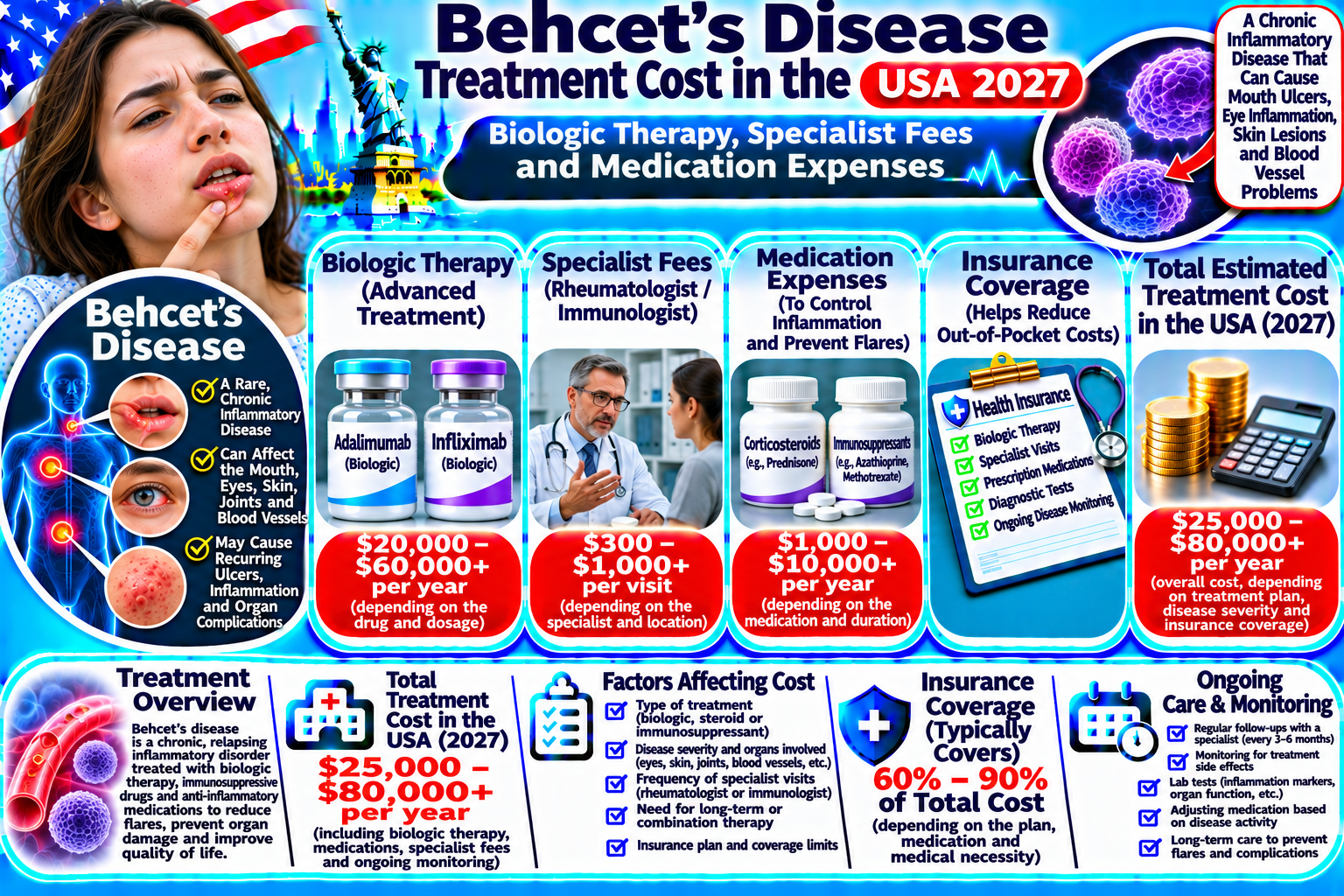
Understanding Behcet’s disease treatment costs in the USA in 2027 is important for patients comparing biologic therapy, prescription medications, rheumatologist consultations, ophthalmologist fees, diagnostic testing, and health insurance coverage.
Mild disease may be managed with relatively affordable medications. However, patients with serious eye, neurological, or vascular involvement may require expensive biologic drugs, immunosuppressive therapy, or hospitalization.
This guide examines estimated American Behcet’s disease treatment expenses for 2027, including specialist fees, medication costs, infusion treatment, insurance benefits, and ways to manage long-term medical spending.
What Is Behcet’s Disease?
Behcet’s disease, also called Behcet’s syndrome, is a systemic inflammatory disorder associated with abnormal immune activity and inflammation of blood vessels.
The exact cause is not fully understood. Genetic susceptibility, including an association with HLA-B51, and environmental factors may contribute to disease development.
Symptoms often occur in recurring episodes called flares. Disease activity and organ involvement can vary substantially between individuals.
Early recognition and appropriate treatment are especially important when inflammation threatens eyesight, blood vessels, or the nervous system.
Common Symptoms of Behcet’s Disease
- Recurring painful mouth ulcers.
- Genital ulcers.
- Acne-like skin lesions.
- Red, painful, or inflamed eyes.
- Blurred vision or sensitivity to light.
- Joint pain and swelling.
- Abdominal discomfort or intestinal ulcers.
- Blood clots or vascular inflammation.
- Headaches and neurological symptoms.
- Fatigue during inflammatory flares.
Not every patient experiences all these symptoms. Treatment is individualized according to the organs involved and the severity of inflammation.
How Is Behcet’s Disease Diagnosed?
Clinical Assessment
There is no single definitive blood test for Behcet’s disease. Diagnosis is based on characteristic symptoms, examination findings, and exclusion of other conditions.
Blood Tests
Blood counts and inflammatory markers may help assess disease activity, although results are not specific to Behcet’s disease.
Ophthalmology Examination
Patients with eye symptoms may require a detailed eye examination to detect uveitis, retinal inflammation, or other complications.
Imaging Studies
MRI, CT, or vascular imaging may be recommended when neurological or blood vessel involvement is suspected.
Pathergy Testing
A pathergy test may provide supporting evidence in selected patients, but a negative result does not exclude the disease.
Behcet’s Disease Treatment Options
Colchicine
Colchicine is commonly used for certain mucocutaneous symptoms and joint manifestations. Generic formulations may offer a relatively affordable treatment option.
Corticosteroids
Topical or systemic corticosteroids may reduce inflammation during flares. Long-term systemic use is limited by potential adverse effects.
Apremilast
Apremilast, marketed as Otezla, is an oral medication approved in the United States for oral ulcers associated with Behcet’s disease in adults.
Immunosuppressive Drugs
Azathioprine, cyclosporine, and other immunosuppressive medications may be used for selected manifestations, particularly when organ-threatening inflammation is present.
Biologic Therapy
Biologic medications such as infliximab and adalimumab may be used by specialists for severe or treatment-resistant disease. Their use for Behcet’s disease is generally off-label in the United States.
Emergency Organ-Specific Treatment
Severe eye inflammation, vascular complications, or neurological involvement may require urgent specialist treatment and sometimes hospitalization.
Behcet’s Disease Treatment Cost in the USA in 2027
Treatment expenses depend on disease severity, medication selection, infusion frequency, specialist visits, diagnostic testing, and insurance coverage.
Patients treated with generic medications may face substantially lower costs than those requiring biologic injections or hospital-based infusions.
The following figures are illustrative 2027 budgeting estimates, not verified future prices, national averages, or guaranteed patient payments.
Estimated USA Treatment Cost Breakdown
| Treatment or Service | Estimated Cost (USD) |
|---|---|
| Rheumatologist Consultation | $200–$800 per visit |
| Ophthalmologist Examination | $150–$600 per visit |
| Blood Tests and Inflammatory Markers | $100–$600 per episode |
| MRI or Advanced Imaging | $800–$5,000+ per study |
| Generic Colchicine | $15–$200+ monthly |
| Corticosteroid Treatment | $10–$150+ monthly |
| Azathioprine | $20–$250+ monthly |
| Otezla (Apremilast) | $4,000–$6,500+ monthly |
| Adalimumab Biologic Therapy | $10,000–$80,000+ annually |
| Infliximab Drug and Infusion Care | $15,000–$100,000+ annually |
| Hospitalization for Severe Complications | $10,000–$100,000+ per admission |
Important: These are hypothetical gross-cost planning ranges. Actual prices depend on drug brands or biosimilars, dosage, treatment schedules, healthcare facilities, and insurance-negotiated rates. Infusion-related expenses may already be included in bundled estimates.
USA Annual Treatment Cost Comparison
Because this guide focuses on the United States, the following table compares American treatment scenarios rather than international countries.
| USA Treatment Scenario | Illustrative Annual Budget |
|---|---|
| Mild Disease With Generic Medication | $1,000–$6,000+ |
| Moderate Disease With Frequent Monitoring | $3,000–$15,000+ |
| Treatment With Otezla | $50,000–$85,000+ |
| Severe Disease Requiring Biologic Therapy | $20,000–$120,000+ |
| Organ-Threatening Disease With Hospital Care | Highly individualized |
These scenarios are illustrative, not standardized medical packages. Medication expenses, monitoring, and hospitalization can overlap, and patients do not necessarily require every treatment listed.
Biologic Therapy Costs for Behcet’s Disease
Biologic medications target specific immune pathways responsible for inflammation. They may be recommended when conventional treatment does not adequately control symptoms or when serious organ involvement threatens long-term health.
Anti-TNF medications are particularly important in selected patients with severe eye, vascular, neurological, or gastrointestinal manifestations.
These treatments are expensive because they require specialized manufacturing, clinical monitoring, and sometimes hospital-based administration.
Infliximab Infusion Expenses
Infliximab is an anti-TNF biologic administered through intravenous infusion. Specialists may prescribe it for severe Behcet’s disease, particularly sight-threatening eye inflammation and other major-organ complications.
Treatment expenses include medication, infusion administration, nursing services, and laboratory monitoring.
Infliximab biosimilars may provide less expensive alternatives to the reference product. Actual savings depend on insurance contracts and facility charges.
Before treatment, clinicians generally screen for tuberculosis and hepatitis B because immune suppression can reactivate certain infections.
Adalimumab Injection Costs
Adalimumab is another anti-TNF biologic used for selected patients with difficult-to-control Behcet’s disease.
It is administered by subcutaneous injection, potentially reducing the need for regular hospital infusion visits.
Several adalimumab biosimilars are available in the United States. Prices vary considerably between products and insurance plans.
Although home administration may reduce facility fees, medication costs and monitoring expenses remain important.
Otezla Medication Expenses
Otezla contains apremilast, an oral phosphodiesterase-4 inhibitor approved for oral ulcers associated with Behcet’s disease in adults.
It may help reduce ulcer frequency and discomfort in eligible patients whose symptoms require systemic treatment.
Because Otezla is a branded medication, its gross pharmacy price can be substantially higher than generic colchicine.
Potential adverse effects include gastrointestinal symptoms, weight loss, and mood changes. Patients should discuss individual risks with their healthcare professional.
Specialist Consultation Fees
Behcet’s disease often requires coordinated care from multiple specialists because inflammation can affect different organs.
A rheumatologist commonly coordinates treatment. Additional consultations may involve ophthalmologists, dermatologists, neurologists, gastroenterologists, or vascular specialists.
Patients with stable disease may need periodic appointments, while those experiencing serious complications may require more frequent evaluations.
Specialist costs depend on appointment frequency, geographic location, insurance networks, and whether additional diagnostic procedures are performed.
Eye Care and Uveitis Treatment Costs
Eye inflammation is among the most serious complications of Behcet’s disease because uncontrolled uveitis can cause permanent vision loss.
Patients may require retinal imaging, detailed ophthalmological examinations, systemic immunosuppressive therapy, and biologic medications.
For sight-threatening posterior eye inflammation, treatment commonly involves systemic immunosuppression rather than corticosteroids alone.
Emergency eye symptoms, including sudden blurred vision or significant eye pain, require prompt medical assessment.
Hospital Expenses for Severe Complications
Some patients develop serious vascular, gastrointestinal, or neurological complications requiring hospital treatment.
Potential expenses include:
- Emergency department assessment.
- Specialist consultations.
- MRI or CT imaging.
- Intravenous medications.
- Endoscopic procedures.
- Hospital room and nursing charges.
- Intensive care when necessary.
Hospital costs vary significantly according to disease severity, length of stay, and the procedures required.
Health Insurance Coverage for Behcet’s Disease
Many comprehensive American health insurance plans cover medically necessary specialist consultations, diagnostic tests, prescription medications, and hospital treatment.
However, biologic medications used off-label for Behcet’s disease may require extensive prior authorization or appeals.
Important insurance considerations include:
- Annual deductible and out-of-pocket maximum.
- Specialty medication formulary coverage.
- Biologic therapy authorization.
- Infusion center network participation.
- Ophthalmology and rheumatology benefits.
- Prescription copayments and coinsurance.
- Hospitalization coverage.
Patients should request written coverage confirmation before beginning expensive biologic therapy whenever possible.
Medicare and Medicaid Coverage
Medicare may cover qualifying Behcet’s disease treatment for eligible beneficiaries according to medical necessity and benefit rules.
Medicare Part B may cover certain outpatient services and physician-administered medications, while Part D may cover eligible prescription drugs.
Medicaid may provide coverage for eligible individuals, although formularies and authorization requirements vary by state.
Factors Influencing Behcet’s Disease Treatment Prices
1. Disease Severity
Mild mouth ulcers and joint symptoms generally require fewer resources than severe eye, neurological, or vascular disease.
2. Medication Selection
Generic colchicine and corticosteroids usually cost less than branded oral medications and biologic therapies.
3. Hospital and Infusion Setting
Hospital outpatient departments and independent infusion facilities may charge different amounts for similar services.
4. Insurance Coverage
Deductibles, negotiated rates, prior authorization, and specialty pharmacy requirements influence patient expenses.
5. Specialist Requirements
Patients requiring several specialists may face higher consultation and monitoring costs.
6. Treatment Complications
Serious infections, medication side effects, and organ complications can increase healthcare spending.
How to Reduce Behcet’s Disease Treatment Costs
- Verify insurance coverage before starting biologic therapy.
- Ask about appropriate generic medication options.
- Discuss covered biosimilar alternatives.
- Use participating specialists and infusion centers.
- Request written medication cost estimates.
- Review manufacturer patient assistance programs.
- Explore Medicare or Medicaid eligibility.
- Consult hospital financial counselors.
Patients should not discontinue prescribed immunosuppressive medications or change treatment schedules without medical guidance.
Frequently Asked Questions
How much does Behcet’s disease treatment cost in the USA in 2027?
Illustrative annual expenses may range from a few thousand dollars for mild disease to more than $100,000 when expensive biologic therapy or serious organ complications require intensive care.
Are biologic medications expensive?
Yes. Infliximab and adalimumab can generate substantial annual costs, although biosimilars and insurance-negotiated rates may reduce expenses.
Does insurance cover Otezla?
Many insurance plans provide prescription coverage for eligible patients, but formulary restrictions, prior authorization, and cost-sharing rules vary.
Can Behcet’s disease affect eyesight?
Yes. Severe eye inflammation can threaten vision and requires prompt specialist treatment.
Can Behcet’s disease be cured?
There is currently no established universal cure. Treatment focuses on controlling inflammation, preventing flares, and protecting organs.
Is long-term monitoring necessary?
Ongoing monitoring is generally recommended because symptoms and organ involvement can change over time.
Conclusion
Behcet’s disease treatment costs in the USA in 2027 depend on biologic medications, specialist consultations, diagnostic testing, hospital services, and health insurance coverage.
Patients with mild disease may manage symptoms using relatively affordable medications. Those with severe eye, vascular, or neurological involvement may require expensive immunosuppressive treatment and coordinated specialist care.
Early diagnosis, appropriate therapy, regular monitoring, and careful financial planning can help patients manage long-term healthcare expenses while reducing the risk of serious complications.
Medical Disclaimer: This article provides general educational and financial planning information only. It does not replace professional medical advice, diagnosis, or treatment. All 2027 cost ranges are illustrative estimates and should be verified directly with healthcare providers, pharmacies, hospitals, and insurance companies.
