Introduction
Eosinophilic esophagitis (EoE) is a chronic inflammatory condition affecting the esophagus, the muscular tube that carries food from the mouth to the stomach. It develops when eosinophils, a type of white blood cell, accumulate in the esophageal lining and contribute to inflammation. Over time, untreated inflammation can cause difficulty swallowing, food impaction, narrowing of the esophagus, and reduced quality of life.

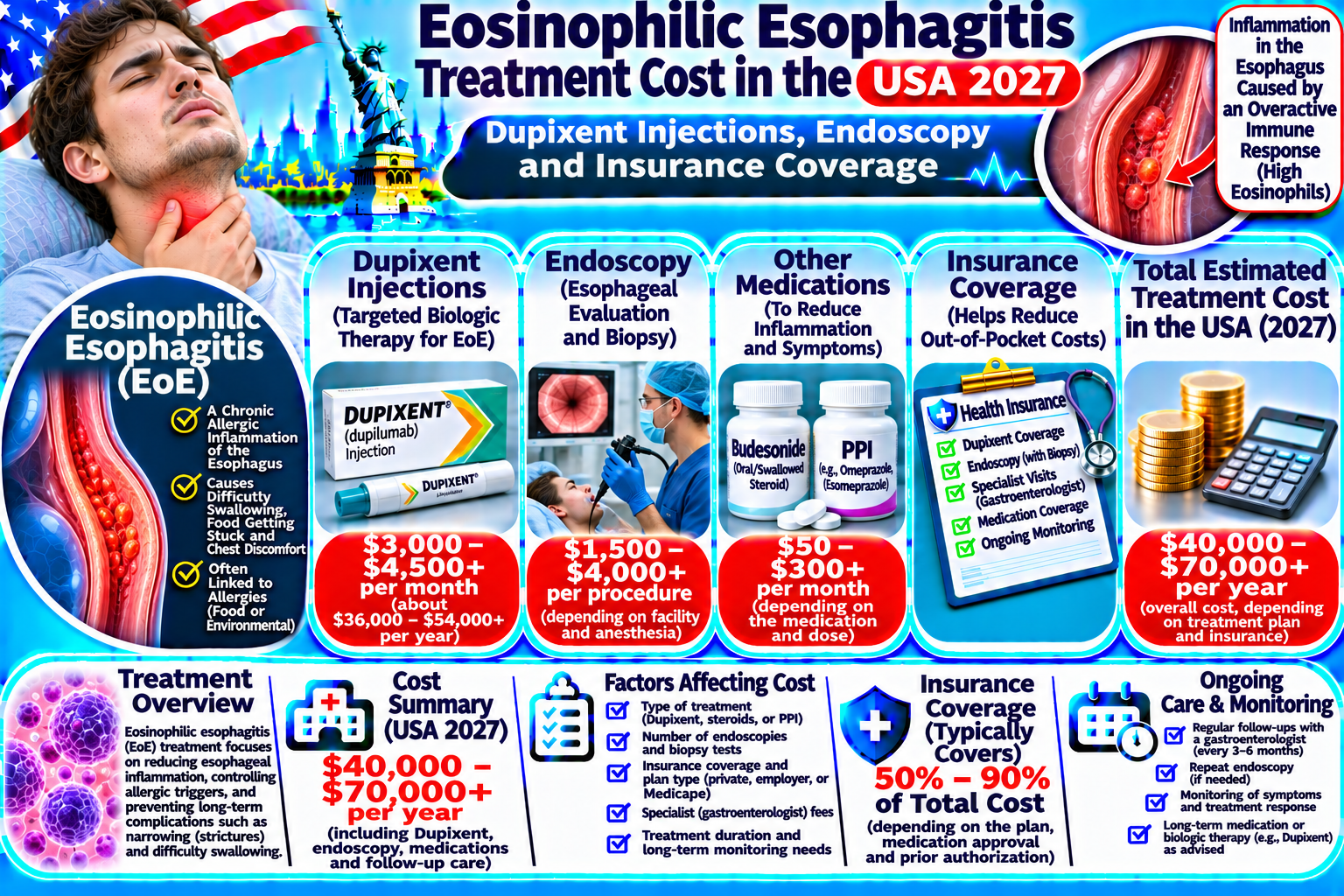
Understanding eosinophilic esophagitis treatment costs in the USA in 2027 is important for patients and families comparing Dupixent injections, upper endoscopy, esophageal biopsies, prescription medications, dietary therapy, and health insurance coverage.
Some patients achieve disease control with proton pump inhibitors or swallowed topical corticosteroids. Others require biologic therapy, repeated endoscopic evaluations, or esophageal dilation for narrowing.
This comprehensive guide explains estimated American EoE treatment expenses for 2027, including diagnostic testing, specialty medications, gastroenterologist fees, hospital charges, insurance benefits, and long-term financial planning.
What Is Eosinophilic Esophagitis?
Eosinophilic esophagitis is a chronic immune-mediated disease characterized by inflammation of the esophagus. Food allergens and other immune triggers may contribute to the condition, although the exact mechanisms vary among patients.
EoE can affect children and adults. Symptoms differ by age, and some individuals experience progressive swallowing difficulties before receiving a diagnosis.
Repeated inflammation may cause esophageal remodeling, scarring, and strictures. These changes can make swallowing solid foods increasingly difficult.
Unlike occasional acid reflux, EoE generally requires ongoing management aimed at controlling inflammation and preventing complications.
Common Symptoms of Eosinophilic Esophagitis
- Difficulty swallowing solid foods.
- Food becoming stuck in the esophagus.
- Chest discomfort unrelated to heart disease.
- Persistent heartburn-like symptoms.
- Upper abdominal discomfort.
- Nausea or vomiting.
- Slow eating or excessive chewing.
- Food avoidance due to swallowing difficulties.
- Poor feeding or growth difficulties in children.
- Reduced quality of life during persistent symptoms.
Food impaction may require urgent medical attention. Patients who cannot swallow saliva or experience breathing difficulties should seek emergency care.
How Is Eosinophilic Esophagitis Diagnosed?
Gastroenterologist Consultation
A gastroenterologist reviews swallowing symptoms, food impaction episodes, allergic conditions, previous medication use, and medical history.
Upper Gastrointestinal Endoscopy
Upper endoscopy, also called esophagogastroduodenoscopy or EGD, allows a physician to examine the esophageal lining using a flexible camera.
Typical findings may include rings, furrows, white exudates, swelling, or narrowing. However, the esophagus can sometimes appear normal despite active disease.
Esophageal Biopsy
During endoscopy, tissue samples are collected from multiple areas of the esophagus. A pathologist examines these samples for eosinophilic inflammation.
Biopsy results are essential because symptoms alone cannot reliably confirm EoE or determine whether treatment is controlling inflammation.
Allergy Evaluation
Some patients benefit from allergy specialist assessment, particularly when they have asthma, eczema, or food allergies.
However, conventional allergy tests do not reliably identify which foods trigger EoE, and they should not be used alone to design an elimination diet.
Eosinophilic Esophagitis Treatment Options
Proton Pump Inhibitors
Proton pump inhibitors, including omeprazole and esomeprazole, are commonly used as an initial EoE treatment. They can reduce esophageal inflammation in some patients.
Swallowed Topical Corticosteroids
Swallowed corticosteroids deliver anti-inflammatory medication directly to the esophageal lining. Options include an FDA-approved budesonide oral suspension and selected off-label swallowed steroid formulations.
Dupixent Biologic Injections
Dupixent contains dupilumab, a biologic medication that blocks signaling through interleukin-4 and interleukin-13 pathways involved in type 2 inflammation.
It is approved for eligible adults and children aged one year and older who weigh at least 15 kilograms, with dosing determined by body weight.
Elimination Diet Therapy
Dietary treatment involves removing selected foods that may contribute to esophageal inflammation. Dietitian support can help patients maintain balanced nutrition.
Esophageal Dilation
Endoscopic dilation may be necessary when inflammation has caused significant esophageal narrowing. It improves swallowing but does not replace treatment of the underlying inflammation.
Eosinophilic Esophagitis Treatment Cost in the USA in 2027
EoE treatment expenses vary according to disease severity, medication selection, endoscopy frequency, insurance coverage, and the need for additional procedures.
Generic proton pump inhibitors may be relatively affordable, while branded swallowed steroid treatments and biologic injections can create substantially higher annual costs.
The following figures are illustrative 2027 budgeting estimates rather than verified future prices, national averages, or guaranteed patient payments.
Estimated USA Treatment Cost Breakdown
| Treatment or Service | Estimated Cost (USD) |
|---|---|
| Initial Gastroenterologist Consultation | $200–$800 per visit |
| Follow-Up Specialist Appointment | $150–$500 per visit |
| Upper Endoscopy (EGD) | $1,000–$6,000+ per procedure |
| Esophageal Biopsy and Pathology | $200–$1,500+ per episode |
| Esophageal Dilation | $1,500–$7,000+ per episode |
| Generic Proton Pump Inhibitors | $10–$100+ monthly |
| Swallowed Steroid Therapy | $50–$2,000+ monthly |
| Dupixent (Dupilumab) | $3,500–$5,000+ per four weeks |
| Dietitian Consultation | $100–$350 per visit |
| Emergency Food Impaction Treatment | $3,000–$15,000+ per episode |
Important: These are hypothetical gross-cost planning ranges. Actual prices vary by facility, medication formulation, dosage, insurance-negotiated rates, and treatment duration. Endoscopy, biopsy, anesthesia, and dilation charges may overlap in bundled bills.
USA Annual EoE Treatment Cost Comparison
Because this guide focuses on the United States, the following table compares different American treatment scenarios rather than international countries.
| USA Treatment Scenario | Illustrative Annual Budget |
|---|---|
| Stable EoE With Generic Medication | $500–$4,000+ |
| New Diagnosis With Endoscopy | $2,000–$10,000+ |
| EoE With Branded Swallowed Steroid Therapy | $8,000–$30,000+ |
| EoE Requiring Dupixent | $45,000–$75,000+ |
| Complicated EoE With Repeat Procedures | Highly individualized |
These examples are illustrative rather than standardized medical packages. Costs can overlap, and not every patient requires biologic therapy, repeated endoscopy, or dilation.
Dupixent Injection Costs for Eosinophilic Esophagitis
Dupixent is an important biologic treatment option for eligible patients with eosinophilic esophagitis. It targets inflammatory signaling pathways involved in the development of EoE and may improve both esophageal tissue inflammation and swallowing symptoms.
Dupixent is administered by subcutaneous injection. The prescribed dose and injection frequency depend on body weight and the approved dosing schedule.
Because Dupixent is a specialty medication, its price is substantially higher than that of most generic proton pump inhibitors. Insurance authorization and pharmacy benefits can significantly affect patient expenses.
How Much Does Dupixent Cost in 2027?
For budgeting purposes, an illustrative gross medication expense of approximately $3,500 to $5,000 or more per four-week period may be considered. This is not a verified 2027 list price or a prediction of the amount an individual patient will pay.
Annual expenses depend on the prescribed injection frequency, insurance-negotiated pricing, treatment duration, and whether additional medical services are required.
Patients should request an individualized specialty pharmacy estimate before beginning treatment.
Dupixent Insurance Approval Requirements
Insurance companies may request documentation confirming an EoE diagnosis, including endoscopy and biopsy results.
Some plans require evidence that initial treatments were ineffective, unsuitable, or poorly tolerated.
Common authorization considerations include:
- Confirmed eosinophilic esophagitis diagnosis.
- Patient age and body weight.
- Previous proton pump inhibitor treatment.
- Previous swallowed steroid therapy, when applicable.
- Documented swallowing symptoms.
- Specialist prescription and clinical justification.
- Insurance formulary and specialty pharmacy requirements.
Requirements vary between insurance plans. Patients should not assume that approval under one policy guarantees approval under another.
Upper Endoscopy Costs in the USA
Upper endoscopy is central to diagnosing and monitoring eosinophilic esophagitis. A flexible endoscope allows the gastroenterologist to examine the esophagus and collect tissue samples.
The procedure may be performed at a hospital outpatient department or an ambulatory endoscopy center.
Potential charges include:
- Gastroenterologist procedure fees.
- Endoscopy facility charges.
- Anesthesia or sedation services.
- Esophageal biopsy collection.
- Pathology examination.
- Recovery and observation services.
Patients should request a complete estimate that identifies whether pathology and anesthesia are included.
Repeat Endoscopy and Biopsy Expenses
EoE symptoms do not always accurately reflect the amount of inflammation remaining in the esophagus. Therefore, specialists often use follow-up endoscopy and biopsy to assess treatment response.
Follow-up testing may be performed after starting or changing treatment, with timing determined by the clinical situation.
Patients who achieve stable disease control may require less frequent evaluation than those with persistent symptoms, strictures, or recurrent food impaction.
Repeated procedures can become a significant component of long-term EoE healthcare spending.
Esophageal Dilation Treatment Costs
Chronic inflammation can cause narrowing of the esophagus, making swallowing difficult. Endoscopic dilation gently stretches the narrowed area to improve food passage.
Dilation can provide meaningful symptom relief, but it does not directly treat the underlying immune inflammation.
Patients generally require anti-inflammatory treatment alongside dilation when clinically indicated.
The procedure may be performed during an endoscopy, and charges can include additional equipment, physician services, and facility fees.
Proton Pump Inhibitor Medication Expenses
Proton pump inhibitors are frequently used as an initial treatment for EoE because they are widely available and generally less expensive than biologic medications.
Common options include omeprazole, esomeprazole, and pantoprazole.
Generic formulations may reduce monthly pharmacy costs. However, patients sometimes require higher doses than those used for uncomplicated acid reflux.
Medication response should be evaluated through appropriate clinical and, when recommended, endoscopic assessment.
Swallowed Corticosteroid Treatment Costs
Swallowed topical corticosteroids reduce inflammation directly within the esophagus. They are an established treatment option for EoE.
Options include swallowed fluticasone preparations and budesonide formulations prescribed according to specialist guidance.
Eohilia is an FDA-approved budesonide oral suspension for patients aged 11 years and older. Its approved treatment course is 12 weeks; safety and effectiveness beyond that duration have not been established.
Costs vary substantially between generic off-label preparations and branded products. Possible side effects include oral or esophageal candidiasis.
Elimination Diet and Nutrition Expenses
Dietary therapy may help control EoE by removing selected foods that trigger inflammation.
Common approaches involve initially eliminating one or two food groups rather than beginning with highly restrictive diets.
Diet-related expenses may include:
- Registered dietitian consultations.
- Specialized food substitutions.
- Nutritional assessments.
- Follow-up endoscopy and biopsy.
- Additional support for children with feeding difficulties.
Dietary restrictions should be planned carefully to avoid nutritional deficiencies and unnecessary food avoidance.
Emergency Food Impaction Hospital Fees
Food impaction occurs when swallowed food becomes lodged in the esophagus and cannot pass normally into the stomach.
Severe episodes may require emergency endoscopy to remove the obstruction.
Emergency treatment can involve hospital assessment, sedation, endoscopy, and observation.
Patients unable to swallow saliva, experiencing breathing difficulty, or developing severe chest symptoms require immediate medical evaluation.
Health Insurance Coverage for EoE
Many comprehensive American health insurance plans cover medically necessary EoE treatment, including gastroenterologist consultations, diagnostic endoscopy, biopsy, and eligible medications.
However, specialty biologic coverage can involve prior authorization, high-tier pharmacy benefits, or specific clinical eligibility requirements.
Important insurance considerations include:
- Annual deductible and out-of-pocket maximum.
- Gastroenterologist network participation.
- Upper endoscopy authorization.
- Biopsy and pathology coverage.
- Dupixent specialty pharmacy benefits.
- Swallowed corticosteroid formulary coverage.
- Copayments and coinsurance.
- Coverage for dietary counseling.
Patients should distinguish between gross provider charges, negotiated insurance rates, and their actual out-of-pocket responsibility.
Medicare and Medicaid Coverage
Medicare may cover eligible EoE diagnostic procedures and treatments according to medical necessity and applicable benefit rules.
Medicare Part B may cover certain outpatient specialist services and endoscopic procedures, while Part D may cover eligible prescription medications.
Medicaid may provide coverage for qualifying patients, although specialty medication policies, authorization requirements, and provider networks vary by state.
Factors Influencing EoE Treatment Prices
1. Medication Selection
Generic proton pump inhibitors generally cost less than branded swallowed steroid products and Dupixent injections.
2. Disease Severity
Patients with recurrent food impaction, esophageal strictures, or persistent inflammation may require additional procedures.
3. Endoscopy Frequency
Repeat endoscopy, biopsy, and pathology services can increase annual treatment expenses.
4. Hospital Location
Hospital outpatient departments and independent endoscopy centers may charge different amounts for similar services.
5. Insurance Coverage
Deductibles, provider networks, medication formularies, and prior authorization requirements influence patient expenses.
6. Treatment Duration
EoE is a chronic condition, so long-term medication and monitoring costs can accumulate over many years.
How to Reduce EoE Treatment Costs
- Verify insurance benefits before scheduled endoscopy.
- Ask about appropriate generic medications.
- Use participating gastroenterologists and facilities.
- Request bundled endoscopy cost estimates.
- Review Dupixent patient assistance eligibility.
- Compare covered specialty pharmacy arrangements.
- Explore Medicare or Medicaid eligibility.
- Discuss affordable dietary treatment options with a specialist.
Patients should not discontinue prescribed treatment or begin restrictive diets without appropriate medical guidance.
Frequently Asked Questions
How much does EoE treatment cost in the USA in 2027?
Illustrative annual expenses may range from hundreds to several thousand dollars for stable disease treated with generic medications. Patients requiring Dupixent or repeated procedures may face substantially higher gross costs.
Is Dupixent expensive?
Yes. Dupixent is a specialty biologic medication with a high gross price. Actual patient expenses depend on insurance coverage, prescribed dosing, and financial assistance eligibility.
Does insurance cover upper endoscopy?
Many comprehensive insurance plans cover medically necessary upper endoscopy, subject to network restrictions, deductibles, and authorization requirements.
Can EoE cause food to become stuck?
Yes. Esophageal inflammation and narrowing can cause food impaction, sometimes requiring emergency endoscopic treatment.
Can eosinophilic esophagitis be cured?
There is currently no established universal cure. Treatment focuses on controlling inflammation, improving swallowing, and preventing complications.
Is long-term monitoring necessary?
Ongoing monitoring is generally recommended because symptoms and esophageal inflammation may recur even after successful treatment.
Conclusion
Eosinophilic esophagitis treatment costs in the USA in 2027 depend on Dupixent injections, endoscopy, esophageal biopsies, prescription medications, dietary therapy, specialist consultations, and insurance coverage.
Many patients can manage EoE with proton pump inhibitors, swallowed corticosteroids, or dietary treatment. Others require expensive biologic therapy or procedures for esophageal narrowing.
Early diagnosis, appropriate anti-inflammatory treatment, regular monitoring, and careful financial planning can help patients manage healthcare expenses while reducing the risk of long-term complications.
Medical Disclaimer: This article provides general educational and financial planning information only. It does not replace professional medical advice, diagnosis, or treatment. All 2027 cost ranges are illustrative estimates and should be verified directly with healthcare providers, hospitals, pharmacies, and insurance companies.
