Introduction
Idiopathic intracranial hypertension (IIH) is a neurological condition characterized by increased pressure inside the skull without an identifiable structural cause. It may produce persistent headaches, visual disturbances, pulsatile tinnitus, and swelling of the optic nerves. Without appropriate monitoring and treatment, some patients can develop permanent vision loss.

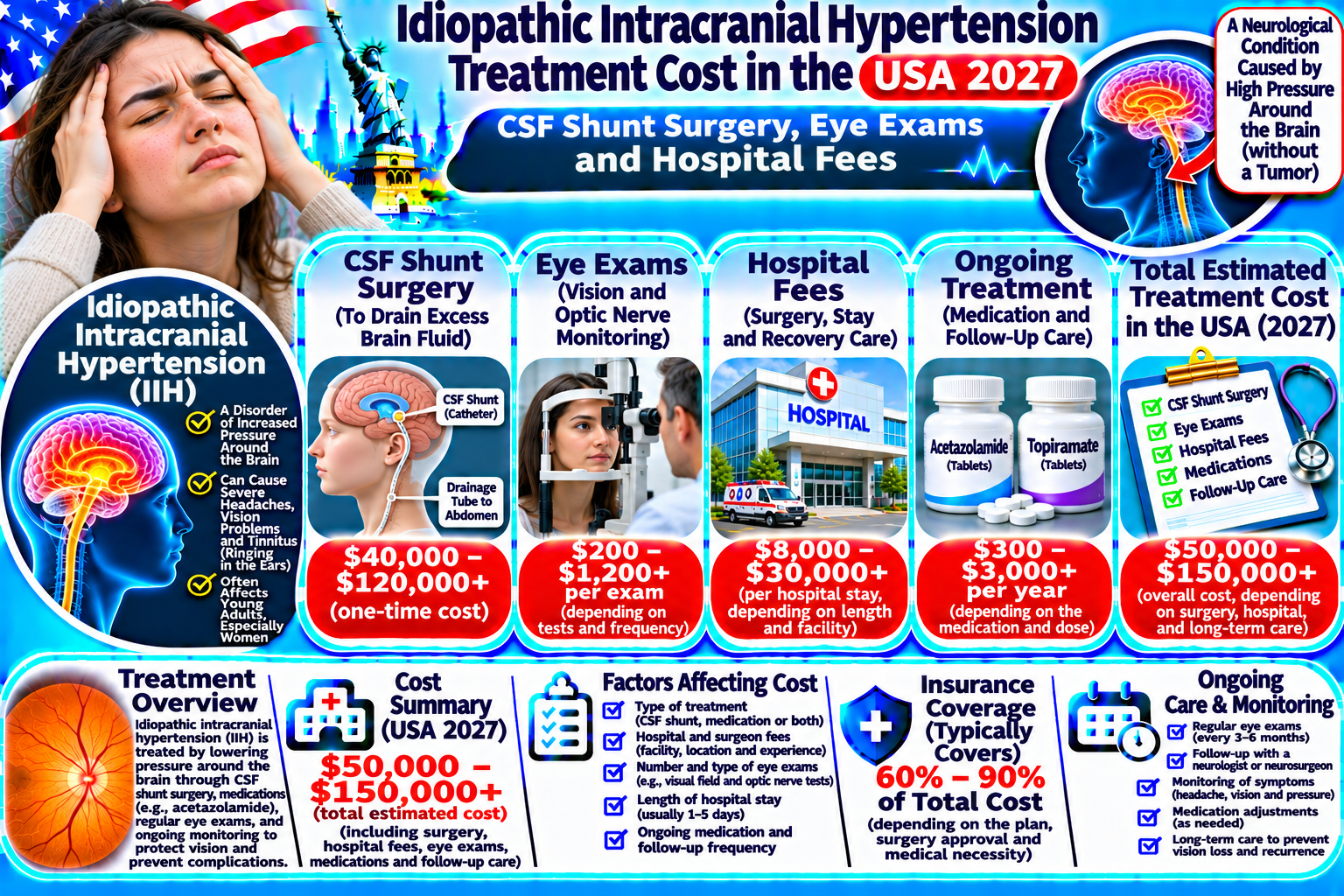
Understanding idiopathic intracranial hypertension treatment costs in the USA in 2027 is important for patients comparing cerebrospinal fluid (CSF) shunt surgery, eye examinations, prescription medications, diagnostic imaging, and hospital expenses.
Many patients are managed with medications, weight management when appropriate, and regular ophthalmology appointments. Others require urgent surgical treatment when vision deteriorates despite medical therapy.
This guide examines estimated American IIH treatment expenses for 2027, including specialist fees, lumbar puncture, MRI testing, shunt surgery, hospital care, and insurance coverage.
What Is Idiopathic Intracranial Hypertension?
Idiopathic intracranial hypertension occurs when pressure within the skull becomes abnormally elevated without an identifiable cause such as a brain tumor or another structural lesion.
The condition is sometimes called pseudotumor cerebri because its symptoms can resemble those of a brain tumor, even though no tumor is present.
IIH is more common among women of reproductive age, particularly those living with obesity, but it can affect people of different ages and body sizes.
The increased pressure may affect the optic nerves and cause papilledema, a form of optic disc swelling that can threaten vision.
Early diagnosis and consistent follow-up are important for preventing irreversible visual damage.
Common Symptoms of IIH
- Frequent or persistent headaches.
- Blurred or temporarily darkened vision.
- Double vision.
- Pulsatile tinnitus, often described as a whooshing sound.
- Pressure or pain behind the eyes.
- Peripheral vision changes.
- Nausea associated with severe headaches.
- Optic nerve swelling detected during an eye examination.
Symptoms vary between patients. Some individuals experience severe headaches with relatively stable vision, while others develop significant visual deterioration.
How Is Idiopathic Intracranial Hypertension Diagnosed?
Neurological Examination
A neurologist evaluates headache patterns, neurological symptoms, medical history, and possible alternative causes of increased intracranial pressure.
Comprehensive Eye Examination
An ophthalmologist examines the optic nerves and checks visual acuity, eye movements, and signs of papilledema.
Optical Coherence Tomography
Optical coherence tomography (OCT) provides detailed images of retinal structures and can help monitor optic nerve swelling.
Visual Field Testing
Automated visual field testing measures peripheral vision and helps identify changes that may require urgent treatment.
MRI and MR Venography
Brain MRI and, when indicated, magnetic resonance venography help exclude other causes of raised intracranial pressure, including venous sinus thrombosis.
Lumbar Puncture
A lumbar puncture measures CSF opening pressure and allows analysis of cerebrospinal fluid. It is generally performed after appropriate imaging has excluded important contraindications.
Idiopathic Intracranial Hypertension Treatment Options
Acetazolamide
Acetazolamide is commonly prescribed to reduce CSF production and help manage raised intracranial pressure. It may improve visual outcomes in selected patients.
Topiramate
Topiramate may be considered for some patients, particularly when migraine-like headaches are present. Its use requires attention to potential side effects and pregnancy-related risks.
Weight Management
For patients with IIH associated with excess body weight, sustained weight reduction can improve disease activity. Treatment may include structured lifestyle support or specialist obesity care.
CSF Shunt Surgery
A ventriculoperitoneal or lumboperitoneal shunt diverts cerebrospinal fluid to reduce intracranial pressure. Surgery may be considered when vision is threatened or medical treatment is insufficient.
Optic Nerve Sheath Fenestration
This procedure may be used in selected patients with vision-threatening papilledema to relieve pressure around the optic nerve.
Venous Sinus Stenting
Venous sinus stenting may be considered in carefully selected patients with relevant venous sinus narrowing and pressure gradients. It is not a routine treatment for everyone with IIH.
Idiopathic Intracranial Hypertension Treatment Cost in the USA in 2027
IIH expenses depend on disease severity, specialist visits, diagnostic testing, medication requirements, surgery, and insurance benefits.
Patients managed without surgery may have relatively moderate annual expenses, while those requiring neurosurgical intervention may face substantial hospital charges.
The following figures are illustrative 2027 budgeting estimates, not verified future prices, national averages, or guaranteed patient payments.
Estimated USA Treatment Cost Breakdown
| Treatment or Service | Estimated Cost (USD) |
|---|---|
| Neurologist Consultation | $200–$800 per visit |
| Ophthalmologist Examination | $150–$600 per visit |
| OCT Imaging | $100–$500 per session |
| Visual Field Testing | $100–$400 per session |
| Brain MRI and MRV | $1,000–$6,000+ combined |
| Lumbar Puncture | $500–$4,000+ |
| Generic Acetazolamide | $15–$200+ monthly |
| Generic Topiramate | $10–$150+ monthly |
| CSF Shunt Surgery | $30,000–$120,000+ per episode |
| Optic Nerve Sheath Fenestration | $15,000–$60,000+ per episode |
| Venous Sinus Stenting | $30,000–$100,000+ per episode |
| Hospitalization for Complications | $10,000–$80,000+ per admission |
Important: These are hypothetical gross-cost planning ranges. Surgical quotations may already include hospital fees, anesthesia, imaging, and device expenses. Actual patient payments depend on insurance arrangements and should not be calculated by simply adding overlapping charges.
USA Annual Treatment Cost Comparison
Because this article focuses on the United States, the following table compares American treatment scenarios rather than international countries.
| USA Treatment Scenario | Illustrative Budget |
|---|---|
| Stable IIH With Medication and Eye Monitoring | $1,000–$7,000+ annually |
| New Diagnosis With MRI and Lumbar Puncture | $3,000–$15,000+ during diagnosis year |
| IIH Requiring CSF Shunt Surgery | $35,000–$140,000+ during surgery year |
| Complex IIH With Surgical Complications | $60,000–$200,000+ during treatment year |
These scenarios are illustrative rather than standardized treatment packages. Not every patient requires surgery, and some diagnostic or surgical charges may overlap.
CSF Shunt Surgery Costs for IIH
CSF shunt surgery is an important treatment option for selected patients with idiopathic intracranial hypertension who experience progressive visual deterioration or cannot achieve adequate pressure control through medical management.
The procedure involves placing a flexible tube that redirects cerebrospinal fluid from the brain or spinal fluid space to another part of the body, commonly the abdomen.
The two principal approaches are ventriculoperitoneal shunting and lumboperitoneal shunting. The appropriate procedure depends on the patient’s anatomy, clinical condition, and neurosurgical assessment.
Hospital Fees for Shunt Placement
Shunt surgery requires specialized neurosurgical services, anesthesia, operating room equipment, and postoperative monitoring.
Common expenses include:
- Preoperative neurological evaluation.
- Brain imaging and laboratory testing.
- Neurosurgeon and anesthesia fees.
- Shunt tubing and valve components.
- Operating room services.
- Hospital accommodation and nursing care.
- Postoperative imaging when necessary.
- Follow-up consultations.
Patients should request a bundled surgical estimate where available because separate hospital, physician, and device charges may overlap.
Shunt Revision and Complication Costs
CSF shunts can develop complications, including blockage, infection, overdrainage, or mechanical malfunction.
Some patients require additional surgery to repair or replace shunt components. These procedures are known as shunt revisions.
Revision costs depend on the underlying problem, surgical complexity, and hospitalization requirements.
A shunt may successfully control intracranial pressure without eliminating every headache. Persistent headache alone does not automatically mean the shunt requires replacement.
Eye Examination and Monitoring Expenses
Regular eye examinations are essential because IIH can damage the optic nerves even when symptoms appear manageable.
Neuro-ophthalmologists may use visual acuity testing, automated visual fields, fundus photography, and OCT imaging to assess disease activity.
Patients with worsening papilledema or visual field loss require closer monitoring than those with stable disease.
The frequency of appointments directly influences annual ophthalmology expenses.
Acetazolamide Medication Costs
Acetazolamide reduces cerebrospinal fluid production and is frequently prescribed for IIH associated with papilledema or visual impairment.
Generic formulations are usually more affordable than surgical treatment, although monthly expenses depend on dosage, formulation, and pharmacy pricing.
Possible adverse effects include tingling sensations, fatigue, gastrointestinal discomfort, electrolyte disturbances, and kidney stones.
Clinicians may order blood tests to monitor electrolytes and kidney function during treatment.
Topiramate and Headache Treatment
Topiramate may be considered for selected patients, especially those experiencing migraine-like headaches.
Its potential benefits must be balanced against side effects such as cognitive slowing, tingling, and kidney stone risk.
Topiramate can cause fetal harm and requires particular caution in patients who are pregnant or may become pregnant.
Some patients also need separate migraine treatment because reducing intracranial pressure does not always eliminate chronic headaches.
Optic Nerve Sheath Fenestration Expenses
Optic nerve sheath fenestration creates a small opening in the tissue surrounding the optic nerve to relieve pressure affecting vision.
It may be considered when visual deterioration is the principal concern.
Costs include surgical consultation, operating room services, anesthesia, postoperative examinations, and monitoring.
The procedure primarily aims to protect vision and is not generally intended as a treatment for headache alone.
Venous Sinus Stenting Costs
Venous sinus stenting is an endovascular procedure considered for carefully selected patients with significant venous sinus narrowing and a demonstrated pressure gradient.
The procedure involves placing a stent to improve venous drainage. Evaluation may include catheter venography and venous pressure measurements.
Expenses include specialist assessment, imaging, stent placement, hospital monitoring, and medications to reduce clotting risk.
Its role in IIH continues to evolve, and not every patient with venous sinus narrowing is an appropriate candidate.
Health Insurance Coverage for IIH
Many comprehensive American health insurance plans cover medically necessary neurological consultations, eye examinations, imaging, prescription medications, and eligible neurosurgical procedures.
However, patients may need prior authorization for MRI studies, specialized eye testing, or surgery.
Important insurance considerations include:
- Annual deductible and out-of-pocket maximum.
- Neurologist and ophthalmologist network coverage.
- MRI and MRV authorization requirements.
- Prescription drug benefits.
- Neurosurgery and hospital coverage.
- Shunt device and surgical facility charges.
- Postoperative monitoring benefits.
- Copayments and coinsurance.
Patients should confirm whether their neurosurgeon, anesthesiologist, and hospital participate in the same insurance network.
Medicare and Medicaid Coverage
Medicare may cover qualifying IIH services for eligible beneficiaries according to applicable medical necessity and benefit rules.
Medicare Part A may cover eligible inpatient hospital services, while Part B may cover certain outpatient consultations and diagnostic procedures.
Part D may cover eligible prescription medications.
Medicaid may provide coverage for eligible individuals, although benefits and authorization requirements vary by state.
Factors Influencing IIH Treatment Prices
1. Disease Severity
Patients with stable vision may need fewer medical services than those experiencing progressive optic nerve damage.
2. Surgical Requirements
CSF shunting, optic nerve sheath fenestration, and venous sinus stenting involve different procedures and hospital expenses.
3. Specialist Monitoring
Frequent neuro-ophthalmology appointments, visual field tests, and OCT imaging increase annual costs.
4. Hospital Location
Hospital charges and neurosurgical fees differ across American healthcare systems.
5. Insurance Benefits
Deductibles, negotiated rates, prior authorization, and provider networks influence patient financial responsibility.
6. Treatment Complications
Shunt infections, mechanical problems, and additional hospital admissions can significantly increase expenses.
How to Reduce IIH Treatment Costs
- Verify insurance benefits before planned procedures.
- Use participating neurologists and ophthalmologists.
- Ask about appropriate generic medications.
- Compare covered diagnostic imaging facilities.
- Request detailed surgical cost estimates.
- Review hospital financial assistance programs.
- Explore Medicare or Medicaid eligibility.
- Ask about covered weight-management services when appropriate.
Patients should not delay urgent evaluation of new or worsening visual symptoms because untreated optic nerve damage may become permanent.
Frequently Asked Questions
How much does IIH treatment cost in the USA in 2027?
Illustrative annual expenses may range from approximately $1,000 to $7,000 or more for stable disease managed with medication and monitoring. Surgical cases can generate substantially higher charges.
How expensive is CSF shunt surgery?
A shunt surgery episode may generate tens of thousands of dollars in gross medical charges, depending on hospital services, surgical complexity, and insurance arrangements.
Are regular eye examinations necessary?
Yes. Visual field testing and optic nerve examinations help detect changes that could threaten permanent vision loss.
Does insurance cover IIH surgery?
Many comprehensive plans cover medically necessary procedures, subject to authorization, network rules, and patient cost-sharing.
Can IIH be cured?
Some patients achieve long-term remission, particularly with effective management of contributing factors. However, recurrence can occur, and ongoing monitoring may be necessary.
Can a shunt require replacement?
Yes. Shunts can malfunction or become infected, sometimes requiring revision surgery. Not every patient experiences these complications.
Conclusion
Idiopathic intracranial hypertension treatment costs in the USA in 2027 depend on CSF shunt surgery, eye examinations, neurological consultations, prescription medications, diagnostic imaging, hospital services, and insurance coverage.
Many patients can be managed without surgery, while those with threatened vision may require urgent specialist intervention.
Early diagnosis, appropriate treatment, regular visual monitoring, and careful financial planning can help patients manage healthcare expenses while reducing the risk of permanent visual damage.
Medical Disclaimer: This article provides general educational and financial planning information only. It does not replace professional medical advice, diagnosis, or treatment. All 2027 cost ranges are illustrative estimates and should be verified directly with healthcare providers, hospitals, pharmacies, and insurance companies.
